Superman Serves

As I reconfigure the words of the Great Commission in my head, I wonder what kind of service Jesus had in mind when he issued us our final job description. He begins the deposition with the words, “All authority has been given unto me.” So in that name—the one with all the power—we go. Our crummy little broken selves are somehow decked out with that same authority.

Like Clark Kent slipping into a phone booth, we pull on the blue lycra saviour suit—in our case with a big red “J” stitched across the chest. Not exactly the Man of Steel, perhaps, but deputised all the same. We get to carry that power into the world: changing lives, making disciples, and teaching them what Jesus taught us. Magnificent. And yet, sometimes the heroics look less like capes and more like a warm meal, a listening ear, or simply showing up—hospitality as a subtle kind of superpower.

The latter part—“I am with you”—takes the emphasis off the “dress for success” requirements and places it instead on simply being with him. He is with us.

The full instructions are:

“Then Jesus came to them and said, ‘All authority in heaven and on earth has been given to me. Therefore, go and make disciples of all nations, baptising them in the name of the Father and of the Son and of the Holy Spirit, and teaching them to obey everything I have commanded you. And surely I am with you always, to the very end of the age.’” — Matthew 28:18–20

When we get curious about evangelism, hospitality deserves a mention, for it quietly plays a supporting role by truly noticing and caring for the needs of others. And honestly, that kind of simple kindness can create space for something deeper: a real connection, spirit to spirit. It’s a softer kind of evangelism, the kind that happens naturally over dinner and conversation.

But there are reasons we sometimes resist a more natural, relational approach to evangelism. We like programmes. We like step-by-step plans and clear outcomes. There’s comfort in having a formula. Somewhere along the way, getting someone “over the line” began to feel like a goal to achieve—just another item on the checklist—rather than something that flows out of genuine connection. My prayer for me is that I can be that kind of missionary—one who loves, cares, and connects.

WAR AND HOPEFUL IMAGINATIONS

Imagination is a danger; thus, every totalitarian regime is frightened of the artist. It is the vocation of the prophet to keep alive the ministry of imagination, to keep on conjuring and proposing alternative futures to the single one the king wants to urge as the only thinkable one.
— Walter Brueggemann, The Prophetic Imagination (1985)

WAR AND HOPEFUL IMAGINATIONS

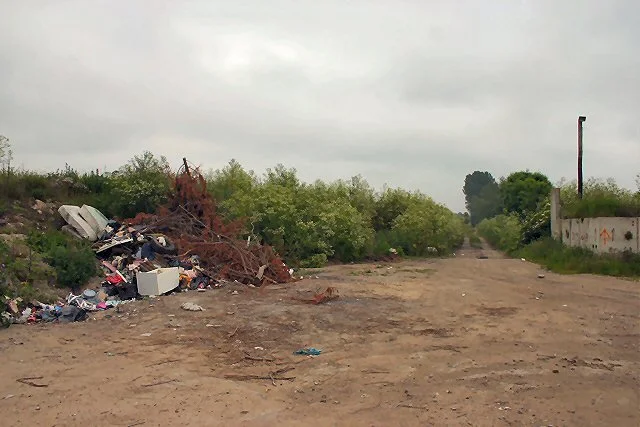
My father regularly took me and my siblings to the local tip. He was an avid gardener. He would connect his small, rusty trailer to the car, and we would help him haul greenery from the garden until the trailer was filled with cuttings—eucalyptus trimmings or grassy weeds—tied down with ropes. Then we would head off on an adventure that ended with the faint smell of compost on our jeans and our mouths feeling grimy as that unmistakable garbage-dump smell clung to our skin.

We were allowed to wander and pick through the piles of other people’s junk. We found dolls and suitcases and furniture and would beg my father to let us take things home. It seems a ridiculous adventure now, considering the risk of germs and sharp objects. Still, in simpler times it was just a treasure trove. We learned to salvage, rescue, and save. We learnt that one man’s trash could be another man’s treasure. Those grimy things can be cleaned. Almost everything can be redeemed.

In this century we are on course to see better use of resources globally and a more respectful relationship with our shocking waste buildup. At the same time, we are dealing with deep piles of justice fallout that have been rotting in the global tip for decades. We are picking through the garbage of the past.

It is worth noting that we are trying to solve two global problems at once: the physical (ecological) and the spiritual (human). Both fit within the story of our reconciliation with God. In Genesis we read that God breathed life into the earth and then into humankind. He longs to see reconciliation in both—our earth and all humanity. He came to earth himself, our second Adam, to demonstrate how serious he is about helping us escape our mess.

If the natural speaks of the spiritual in any way, our efforts to right ecological wrongs might mirror or foreshadow the redeeming of the soul of humanity: creating a people intent on treasuring all life—humanity, animals, and the planet. A humanity that owns up to the injustices of the past. A society moving away from a clinical, frightened separateness and the glorification of the individual.

As we comb through the piles of garbage—the trash of wars, apartheid, racism, and tribal brutality—I remain hopeful. It is messy work, and the risks are high. But perhaps this is what redemption looks like: people willing to sift through the ruins of the past, believing that something worth saving might still be found.

Perhaps this, too, is part of the prophetic imagination: refusing to believe that the story buried in the rubble is the only one we will ever have.

Faith Mosaic

God doesn’t change—yesterday, today, and tomorrow, the same God. But we? We change constantly. We reinvent ourselves, our bodies, our minds, and our spiritual practices again and again. Isn’t it natural, then, that our faith would shift and reshape along the way?

This is the human story—a messy, multi-layered, wonderfully unpredictable path through life. Every fragment of your spiritual journey, every stumble and triumph, is useful and redeemable. Own it. Don’t get stuck in spiritual regret, and don’t settle for spiritual stagnation. Keep growing. Keep exploring. And most of all, be proud of the crazy mosaic of your faith that you walk upon.

In Joni Mitchell’s iconic song “Big Yellow Taxi", she laments, “They paved paradise and put up a parking lot,” capturing the careless destruction of nature in favour of ugly urban development. We often bury our personal histories—ashamed of the mess and mistakes. They are covered over with layers of shame and regret? I look back at my childhood innocence as unimportant, sweet perhaps, and my young adult fervour as slightly cringeworthy, but all parts of the walk make up the spiritual man. We have little locked safes that house the various iterations of our faith journey. We don't often open them up and gaze upon the footsteps.

From a spiritual perspective, embracing and learning from the past can reshape our journey into a kind of “paved paradise". Each brick, each stone, becomes part of our inner growth.

In recent decades, a spiritual deconstruction “industry” has emerged—one that markets the ugliness of our past like a bonfire of self-consciousness. Too often, the ashes are then used to stoke revenge and remorse rather than healing.

We just dress ourselves in the faith of the now. People lack curiosity and desire to explore beyond their past. Or, just as often, we discard faith altogether and spend our lives complaining about its failures and disappointments – never truly owning our part in the dismantling. 

Then there are the blinkered ones. When we stand at the hotel window, refusing to look down – never noticing the parking-lot rubble and the human mess all around. Their eyes are dutifully bolted heavenward, entranced by the noble sway of palm trees. This was me for a good few years. 

Scripture consistently encourages believers to reflect on their actions and grow from them. Repentance, derived from the Greek word "metanoia", signifies a transformative change of heart and mind. This transformation isn’t about erasing the past but redeeming it. Repentance, actually by its very nature, ensures that we look backwards. 

Apostle Paul could have been embarrassed about his LinkedIn profile; instead, he doesn’t shy away from recalling his past. He uses it to demonstrate the boundless grace of God: “But by the grace of God I am what I am, and his grace to me was not without effect."

Instead of tossing our mistakes in the bin, what if we saw them as paving stones on the spiritual road? Every twist, every wrong turn, every misstep—it all gets built into a faith that can actually hold up when the storms roll in. Recycling those faith experiences turns our path into something walkable and interesting for others too, not just another pile of ashes.

Church

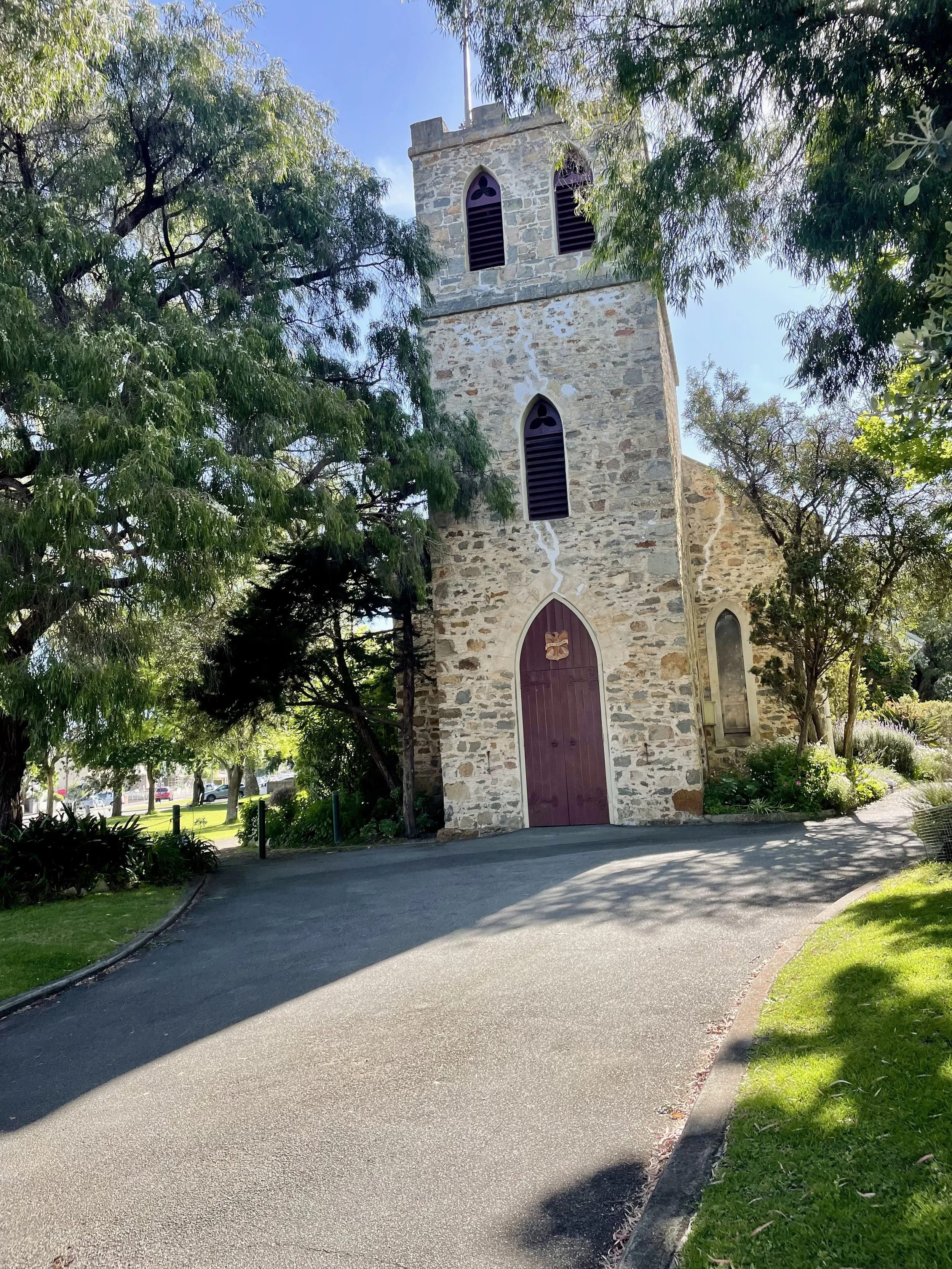
St. John the Evangelist, Albany Western Australia

I’ve always thought of church as a perilous place. Anything can happen. They don’t call us Bible bashers for nothing. Church feels a bit like a giant football pitch where anyone gets to play—even if you’ve skipped training and have no clue how to handle the ball. I’m a big fan of letting everyone have a go—speak, serve, get involved in the life of the community. But that kind of wide-open liberty does come with a few pitfalls. Even Jesus, if you read the Gospels, was surrounded by plenty of rookies. So the trick is to stay both watchful and gracious—and maybe wear some padding while you’re at it.

Most of us sense the tension in church life—the constant pull between “heaven now” and the hard truth of our brokenness, our ongoing need for a saviour. I’ve often felt the unease of being part of a church that, as theologian Gordon Fee once put it, lived in “heavenly overdrive”—claiming too much of heaven’s reality too soon. He pointed to Corinth as the classic example: a church trying to grab hold of it all at once, what he called “over-realized eschatology.” On the flip side, others build their entire faith around the fallenness of the world. So which is it? Do we strap on the Superman cape—or settle into Clark Kent mode for now?

I’ve drifted between both extremes: congregations where worship looked like laughter in the Spirit and full-on laps around the auditorium, and others where it was the hushed, liturgical rhythm of the Catholic mass. Small wonder so many people wonder what “church” really is meant to be.

You don't have to yell

In Letters to Young Radicals, political science professor Aurelian Craiutu makes a case for the overlooked virtue of moderation. In our current climate, moderation doesn’t sound appealing. We’re told to “pick a side,” to plant our flag firmly on one end of the spectrum—right or left. Yet Craiutu argues that moderation is not weakness but strength: more courageous, more hopeful, and ultimately more constructive than polarization.

By its very nature, moderation stays open—to nuance, to complexity, to the interests of all parties. A moderate doesn’t have far to walk toward those on either side. Isn’t this where Jesus stood? Accessible to all, unafraid to meet people where they were.

And yet, we gravitate toward the loud and the radical. We admire leaders who sound unshakable, who present their faith in stark, uncompromising terms. We often equate radical faith with deeper faith. But perhaps we need honesty here: maybe the church would do better to seek humility and holiness, rather than pure boldness, in its leaders.

Moderation does not mean blandness, nor does it lack courage. Refusing to yell may feel risky in our all-or-nothing world, but it creates the space for genuine, meaningful conversations.

Ref. Craiutu, Aurelian. Why Not Moderation? Letters to Young Radicals. Cambridge: Cambridge University Press, 2023. ISBN: 978-1108848855

Being presence

Philosopher Jacques Maritain, who came to visit Merton at the monastery once, said, “If there’s a place where Christ isn’t present, you go there. Christ will be present this way.” I think it is this transformative place of living from presence that allows us to resonate with others—meeting them in their presence, rather than through our ideas about them or their ideas of us.

Richard Rohr's Daily Meditations, Learning from Thomas Merton August 25, 2025


The Exhibition

Christ wanted his followers to throw out any Pharisaic-style public exhibitions and replace them with an authentic self—something that could be permanently nailed to the wall, reflecting Him as the artist in residence.

Beware the curated life. All seems well until the wind blows the easels down.

If we choose to offer up our real selves—our messy and surrendered selves—Christ collaborates with us to turn it into true art. Something eternal. Immovable. Attractive.

The Communion Act

Sometimes, when I fold a towel,
or smooth a napkin's crease,
or guide the nose of an iron along a cotton sleeve,
I imagine I am a Catholic priest—
folding white linen at the communion table.

I have one napkin,
used only to line the bread basket.
It’s nothing special—except to me.
And every time I fold it,
I think of the ritual.
Always.
No exaggeration.

Communion dazzles me.
Not with spectacle—
but with stillness,
with repetition.

The priest moves through his ceremony
as he has so many times before.
He swirls the water, the wine—
a quiet bartender at a holy bar.
A fast-food worker assembling another Big Mac.
A lab tech preparing another sample.
Always the same.
Always different.
Always holy.

He is housekeeper, host,
servant, celebrant.
Altar boys by his side.
People cupping hands,
tongues extended,
eyes closed.
Some sip the wine.
Some pass.
Some come with crossed arms,
asking only for a blessing.

We come forward like birds—
reaching for a scrap of bread.
It is enough.

Then, he clears the table.
Folds the cloth.
Wipes the rim of the chalice.
Sits, just for a moment.

And then he rises.
And sends us out—

"Go in peace,
to love and serve the Lord."

Forgiveness - making room for mercy

As Paul writes, “Be kind and compassionate to one another, forgiving each other, just as in Christ God forgave you” (Ephesians 4:32).

The right to be right is enjoying its moment—and perhaps understandably so. In a world reckoning with centuries of injustice—racial, gendered, colonial, religious—being right has become a kind of moral currency. We demand apologies from prime ministers and popes, from cardinals and authors, not just for personal wrongs but for collective wounds that have festered through generations. In this climate, forgiveness becomes even more radical—not as a denial of justice, but as a surrender to God. It calls us not to forget the past, but to yield our need to win. True forgiveness, like Christ’s own, costs us something. It’s not cheap grace. We lay down our right to be right to make room for mercy, which heals. It’s the mercy in the face of pain that heals.

Menashe

The word Menashe is an interesting Hebrew word. It offers a  kind of redemption through holy forgetting — a spiritual amnesia. The word, means “causing to forget” or “one who makes forget,” and speaks to the grace of God that soothes old wounds and frees us from past traumas. Its root is the Hebrew verb nashah (נָשָׁה), "to forget," but the forgetting it describes is sacred — a help that lifts the weight of what once was.

Through the process of Menashe, God has gently covered my pain, not to erase it, but to redeem it. I have not been left bitter or broken: It invites all to move on. It echoes the voice of the Lord in Isaiah 43: “Forget the former things; do not dwell on the past. See, I am doing a new thing! Now it springs up; do you not perceive it? I am making a way in the wilderness and streams in the wasteland.”

Menashe is that way in the wilderness — the grace to leave behind what held you, so you can walk freely into what God is making new.

Holy Smoke

They said, ‘Now don’t go missing out on what God has got for you’.

It made  me sort of desperate and frantic. I exchanged my pilgrim slippers for the neon lights of the ‘Price is Right’ and moved away from mystery. It’s just in my nature to gravitate toward where things are happening.

Now, decades later, I sit by dim candlelight barely able to make out the river or the sky. Just faithfully boiling the kettle over the smouldering ashes. Warmed by holy smoke.

It is by the goodness of God that He realized I would need a lot of help, and, so he sent Jesus. He bent down in grace to give me something to grip onto, a handle on himself, so that maybe I could relate to the mystery that is God.

Closer

Brené Brown says it’s hard to hate people up close. Most of the time, we judge or dislike from a distance, but once we actually get to know someone, we often find ourselves thinking, “They’re not so bad after all.” Maybe the answer isn’t standing our ground behind fences, but choosing to move in closer.

The Head Office

Jesus asked a lot of questions—even though He already knew all the answers. Instead of just giving information, he challenges people to reflect on what they truly love and desire. What do you want? Are you hungry or thirsty? What drives you?

As Christians, we ought to shape our discipleship around asking questions rather than just handing people a set of beliefs. Or at least find a balance. It is usually better to set aside the catechism books and actually listen to people. That’s what makes the Alpha program, which started years ago at Holy Trinity Brompton in London, so effective—it begins with honest conversation. Like any meaningful project or legal process, it starts with a discovery phase before jumping to conclusions.

This morning, I read a passage where Paul speaks to the Church at Philippi:

And this is my prayer: that your love may abound more and more in knowledge and depth of insight, so that you may be able to test and prove what is best and may be pure and blameless for the day of Christ. Phil 1:9-10.

Many therapists, particularly those who use Cognitive Behavioral Therapy, operate on the principle that you are what you think—change your thinking, and your life will improve. But Paul’s prayer suggests a different perspective: you are what you love. Jesus challenges the assumption that humans are primarily thinking beings, proposing instead that we are first and foremost seekers of love and acceptance. What if, rather than defining humans by what they know or do, we defined them by what they desire?

How would this change how we approach Christianity, and particularly how we promote our faith? Determining 'What do you love?'—not what you are buying, how you are spending your time, and what you are addicted to—these are the lowest-hanging fruits of our cultural dance. Distractions. Instead, we eyeball and drill down to questions of first loves and desires. Think about love as the starting menu, with knowledge only as a vitamin supplement.

The ballooning levels of anxiety and depression are a result of expectations that often have no bearing on what we truly want. This amnesia towards our natural, deep desires causes grief inside. Social change, gender issues, sexual expectations, success models, and the like have made mental pathways very complex, thereby clouding our real desires.

Knowledge doesn't teach us how to love. Everyday distractions grind away at destroying or at least distorting our love meter.

Love is built in by God—just covered in worldly lard. Love gets lost in life's fat roll and our Instagram feed.

Before you say it, I know this gets very loosey-goosey and feeds right into the 'do what feels good' mentality of the day, but maybe heart feelings are a better starting point than a desk and a bible and a concordance. I should have followed my heart more during the 30 or so years that precede this narrative. Instead, I bought way too many shares in the Head Office concept of faith. i.e., Christianity as a successful ‘business’ model and life choice. Now I want to deploy a more Augustine way of love: 'You have made us for yourself, and our heart is restless until it rests in you.'

The Long Night in Malaysia

Our typical Malaysian break comprises of a mixture of R&R – rest and religious activity. We have travelled to the Island of Penang perhaps 20 times over the years. The year of this particular sojourn is 2018, and we feel a stronger sense of missional purpose. Some years, we only want to hide, swim, and eat Laksa. This year, we come flaunting our pastoral badges and agree on a plan to be ‘available’ – cue appropriate worship song – we are ready for whatever and whoever comes our way.

This night is typical—a quickly organized trip with few details. We don't know where our friends are taking us or what to expect. We have been friends with Pastors Ann and Antony for many years, and we trust their judgement and respect their expression of faith. It's not exactly our expression, but together we make up an eclectic team. Earlier we taxied from our hotel to a hawkers style restaurant where we met up with our friends and shared coffee and Roti Canai. Most events in Penang begin and end with food. We are surprised they bring their grandsons, and we all pile into their car. Antony explains they are planting a church up north and tonight is a gathering for prayer and fellowship as a first step. 

We should have known it would be a long night when we stop at a Caltex gas station for snacks after an hour on the road. The little boys return with sweets, and Master Chef sips on a cup of coffee from a gaudy paper cup. Think 7-Eleven Malaysian style, except those vile rolling sausages are replaced with chilli-flavored rolling wieners. Same all over the world. It is already dark, and we are en route to a house church meeting. We veer back onto the four-lane highway northbound towards the Thai border.

We arrive about 2 1/2 hours later in a small town. We are welcomed into a home sparse and barely furnished. The walls appear to be newly painted in a light blue-green, and the ceilings are high. A fan stands in one corner, working to keep the room cool. We are led to the kitchen where a few women hover around the stove, cooking up a big pot of Bee Hoon noodles as well as some sort of sticky fruit jelly dessert served in plastic cups. Master Chef connects with the cooks and offers encouragement. Lots of laughter. We recognize the mother and kids that live here. She leads the music team at Antony's church in Penang. With newfound respect, it dawns on me that she must be travelling so far to join that service each Saturday evening. What commitment.

We start with worship led by a couple of the children on a keyboard and bongo drums while our host receives calls on her phone and races off to collect neighbours on her scooter. She returns now looking nervous as the room swells with families and children. Pastor Anthony scolds her for not providing enough chairs.

An obviously disturbed woman and her mother join us. The daughter periodically cries out and rocks back and forth while her mother comforts her. A sick older man has to be carried in from the car. We meet neighbours, family and church friends. Most people stand around the edges of the room, and children sit cross-legged on the floor. Sort of awkward in a typically Malay kind of fashion.

We are asked to 'bring a word.' Be ready, in all seasons.

Chef chose to wear his Cargo shorts and a tank-top. A culturally dumb choice. Pastor Antony introduces him with a joke about the attire, and the crowd loves it. He probably tells them that this big white man can be trusted even though the tattoos, shorts and shaven head are not the standard dress code for pastors. Antony warms up the crowd as he can do so well. We see the faces recognizing that this is one of their own. He is loud, direct and engaging. He translates the message that Chef shares. At the conclusion, we pray for all those that come forward for a blessing while the songs from the beginning repeat. We feel welcome and respected despite the tatts and our whiteness.

We worship. We pray. We eat Bee Hoon. And the jelly cups.

As we depart, the woman, who had demonstrated such disturbing behaviour, motions to me by patting her head. 'She wants you to pray for her,' urge the others. She is calm as I pray. Fear leaves her just for a while. Within a few minutes, she is rocking and screaming, and the host struggles to place her and her mother on the back of her small scooter to drive them to their nearby house.  

We pile into our car, weary after the service. The noodles sit heavy in our bellies, and I regret drinking three tall glasses of tea. The children are exhausted. The youngest boy, Jordan, has been coughing all night. He doesn't seem well. Already the life of service and ministry is being built into the young boys. They don't complain.

Our friends drop us at a huge McDonald's near their home in Penang. I had suggested stopping there for the free Wi-Fi. This causes confusion. Why here? Do you want fries? A thick shake? No, I just want to get home now! I need the Wi-Fi so I can call an Uber to get us back to our hotel. Everyone is cranky with me, including Chef. I can’t see the point of Antony driving us 45 minutes out of his way with a sick child. It is already after 1 a.m. I get my way and Hännes and I Uber back to Gurney Drive.

We enter our hotel at about 2 am as a Chinese wedding is just wrapping up. The gaudy Christmas snowy castle in the huge marbled foyer looks even more out of place than usual. Wedding guests in black tie dress wait for their taxis in the lobby, and the band is loading up a minivan outside. I am greeted with a sincere 'Welcome Back, Mrs Hannes.' The handsome bellman is sporting a red cap with gold trim, his uniform clean but showing signs of its hundreds of washings. His hand moves to the white gold buttoned jacket in a chest salute as he welcomes me and opens the big glass doors to the lobby. I wondered where he thought we had been on this Saturday evening. He probably imagines we were coming back from a flash restaurant in one of Georgetown's hotels, or perhaps we had booked a car and driver to go across the bridge to sample the seafood delights at a remote restaurant outside of Butterworth. How could I explain the long journey up the coast to speak to a group of locals and the noisy ministry time? Even I found it peculiar.

The lobby is cool and spacious. It would have had a sense of luxury about 30 years ago, but now the dark wood everywhere makes it heavy and dated. The latticed doors of the British-style pub are uninviting. We love its slightly off-prime feel, and the nightly price is excellent. The marbled atrium with a never-used grand piano creates a feeling of quiet and a reprieve from the still, humid air outside and the noise of traffic moving along the Drive.

The brown leather couches and the centre glass table topped with a giant urn filled with fresh flowers flank the Front Desk. The evening staff have their heads down, most likely looking through check-in data for the following day. It is a familiar and restful place for us. We have been coming to this same 3-star hotel for many years.

We are exhausted.

We are still doing this stuff. Acting it out. The big white Evangelists. After all these years and the prodding of the gentle ghost. After all the changes and the misgivings, all the re-evaluations, and the denials. After all the hurt and tossing. The book burning. We remain true to this. True to a message. Now it is many years hence, and I'd do the same thing all over again. The Bible remains relevant. Amidst all the damage to that book, it is a good read. The Good Book. Remarkable.

It remains to be seen how I will view this story of the long night in Malaysia, let's say, in another five years. 

I put my faith to bed that night. Washed off the daily grime. Moisturized with self-respect. I knew that by dawn, I would be refreshed and ready to meet the new day. The failures and heartaches are not gone but quietened as God does his work, and I breathe the cleanse of another night's sweet rest.

Pin the Tail on The Donkey

I have spent the past 20 years or so playing a game of Pin the Tail on the Donkey. You know, the party game where someone is given a mock-up of a donkey's tail, blindfolded, spun around and around until they are dizzy, and, then, has to try and find the right place to attach the tail to the poster of the Donkey in front of them.

It's been a time of reconnecting myself to reality so that my spirit, mind and body can better synchronize.

For a large swath of my time as a believer, I was obsessed with this notion of 'you are in the world but not of the world .' I viewed myself as an alien. A citizen of heaven rather than this world. I was set apart for great things. I knew that as I was living and breathing, catching buses, painting toenails, and eating hamburgers, I was in the world. But, I was determined not to succumb to its profanity. Wow. What a trip.

Recently, I took time to contemplate and rethink the passage in the Gospel of John.

Jesus says as part of his farewell speech in Chapter 17:14, "I have shared your message with them, and the world has shown hatred towards them because they belong to you and not to the world. They are not a part of this world, just as I am not. While I do not ask that you take them out of the world, I do pray that you protect them from the evil one. They are not of the world, even as I am not of it". Later, Jesus commissions them to be sent into the world just as he was sent.

So there we have it. I get it. I didn't make it up.

I had attempted to follow this to the letter and live my best life in two partitions - two zones.

One, the world, inherently suspect and possibly evil. I considered the actions mentioned earlier as worldly, never sacred practices. The other side was my spiritual world of worship, prayer, mission and engagement with God.

I was forever trying to discard my humanness and wriggle into my Jesus clothes. I strived towards perfect status. I didn't look for places of connectivity. There was a dividing line separating the profane and the sacred.

Now, I have become so fascinated with the places where my humanness and my spirituality can mesh together. Indeed, that's the sublime part. Dancing and twirling and then having a go at stabbing my pin into the real world and finding my place. Enjoying the mix.

It is as if I am sitting at a sewing machine with different types of cloth before me. I am trying to piece together outfits that will not only be pleasing to God but also make my sojourn in the world more enjoyable and purposeful.

The Bible has something to say about patches - and possibly donkeys tails. Matthew advises in his gospel that you can't easily tack a piece of unshrunk cloth onto an old piece of cloth. The integrity of the fabric will be compromised. This confounds me now. The God that redeems all things makes my humanity and my spirit hold together despite the awkward joins. We are perfectly imperfect and supernaturally natural.

We can applaud, laugh, and cry as we whip off the blindfold and find we either are way off the mark or have performed the consummate party trick!

The patch is usually visible – only the expert seamstress can make the place of the patch invisible. Nevertheless, God sees the seam and delights in our attempt to marry up the sacred with the everyday things.

We wear our human garments as designed and our spiritual fashions together. A good life can make them cohesive and functional – and beautiful! This task demands authentic behaviour - to act genuinely and sincerely and have a shameless acceptance that people will notice the seams. – the tag will be exposed - and occasionally, I'll wear something inside out and display all the messy seams.

Lions dressed up as lambs. Lambs with giant pink bows on their tails. Elephants in tutus. Donkeys with no tail.

We are only human, after all. Right?

Selah

The Giant Pause – Selah


The word selah is mentioned 74 times in the Hebrew Bible, and the meaning has been a hot topic for theologians. I think of selah as a pause between what has been revealed and what is yet to come.

A moment of reflection. A meditative bench.

We are in such a time right now that demands a giant pause.  It offers pause to reflect on the past and to dream about what will be—our chance to reset in order to thrive in a future time.

Now that the shock of our new status quo has subsided, this is the time to ask some critical questions. 

What can I do from now on to flourish?

 Where can I find meaning and satisfaction?

What does connection with others mean to me?

 What counts as a good relationship?

 Selah

Who am I?

Selah

God is gracious. He allows for this breath. This selah. This tremendous opportunity.