
“Every valley shall be raised up, every mountain and hill made low; the rough ground shall become level, the rugged places a plain.” (Isaiah 40:4)
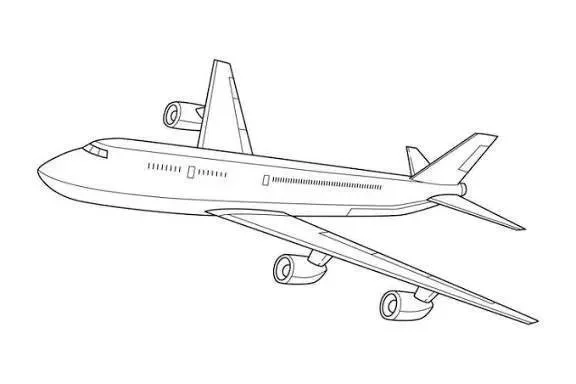
I love that time on any flight when you've done all the hard work of checking in, customs and bag drop. All that remains is to wait. The waiting time is always the same. People are all in the same mood – friendly but reserved, and in their own world. Just an unstated vibe that we now know well. Sort of a communal, “Well, here we all are.” Sigh.
I always try to be late so that I might just walk onto the plane. My gate-wait mood has a hint of disappointment that I haven't timed it well again. I've fallen into the trap of caution. Be at the airport two hours ahead. Yeah. Sure.
So, you're in your seat, and the hosties (humour me) are flitting around, closing all the overhead lockers and vacantly glancing at the position of cabin luggage and seat belts.
The captain interrupts. Always the same gravelly voice from the flight deck. He's waiting for clearance. He knows so much more than we do. He's checked the maps and weather. He's done this all before – just another day at the office. At least, we hope so.
I strain to catch phrases like, “Fairly good weather expected ahead after a few bumps on our way out this morning.” Why is no one paying attention? This person has all our lives in his throttle.
He ends on a positive note. “Well, I invite you all to sit back and relax and enjoy the excellent service of our cabin crew... Gloria up front. Micha, Richard....”
That's what I'm talking about! I paid for this crew to get me to the other side. The onus goes back to them. I settle.
Statistics tell me that a third of travellers admit to some form of flight-related anxiety, ranging from mild nervousness to an outright inability to step on board a plane. That's a lot of people. I was one of that third, somewhere in the middle of the spectrum.
I would get so anxious that I couldn’t sleep the night before flying. It took the joy out of the last few days of any holiday as I anxiously wound myself up about the return flight.
I remember, on our wedding day in Zurich, at the banquet lunch, my brother-in-law handed us airline tickets for our return flight from the honeymoon. We had planned to take the train both ways to Ticino, the Italian part of Switzerland.
I had to work hard to fully enjoy the honeymoon, knowing we would have to return home on a small aircraft over the Alps. It actually was a good flight – a sunny day. We were given champagne and a huge chocolate in the form of a Swiss five-franc coin. The woman next to me was dressed from top to toe in fur and carried a small Chihuahua inside her coat. A dead-heading Bond woman?
I was scared of flying. I was scared of dying. I didn't feel claustrophobic or physically unwell. I just worried the plane might go down and I would end up happily married but dead somewhere at the bottom of a chilly Swiss lake.
The anxiety had a genuine beginning. It began back in 1980 on one particular flight. I had plans to meet my mother at New Delhi airport, from where we planned to travel together to Kashmir.
Mum had taken a job in Sri Lanka working for the Australian Foreign Aid Bureau, ADAB. My father had taken early retirement to accompany her to Colombo. They enjoyed the expat life, the privileges and colour associated with an exotic diplomatic life. They played the role perfectly.
Mum was due to visit some projects in Kashmir that were receiving Australian funding. I was to join her on the work trip. By the time I met up with her, I would be a blubbering mess on any flight.
Buckle Up
In the weeks leading up to this, I had been travelling through Thailand, followed by a seven-day visit to Burma (now Myanmar). At the time, entry was permitted only on a strictly limited seven-day visa.
Visitors were expected to use only government-registered accommodation and transport. Officials wanted to know exactly where the tourists were at all times.
With family contacts in Burma and, being something of a maverick, I bent the rules a little. Instead, I arranged to stay with local friends in Mandalay and travel by small boat and in a friend's car – neither of which was officially registered. I remember being instructed to lie down on the bottom of the boat for a stretch along the river as we passed a checkpoint.
Anyway, on the Thai Airways flight from Bangkok to Rangoon, we encountered a severe electrical storm. From memory, it was a smaller plane, perhaps a Boeing 737 carrying about 60 passengers.
As we descended into Rangoon airport (now known as Yangon), the pilot made a very violent and sudden change of plan, and we gained altitude with great speed and tremendous sound.
At this point, all the electrics seemed to go out. It was a late-afternoon flight, so we were not in darkness, but something was amiss. I was quietly freaking out.
I had not spoken to the passenger next to me except for an initial greeting when we took off, over an hour before this incident. Now he turned to me and mumbled something.
I must have looked terrified, and he told me that he was an off-duty flight engineer with Thai Airways. That was somehow reassuring. But he didn't seem reassured. That didn't help.
I remember he offered me a cigarette. I didn't smoke – never have. But on that flight I did.
The lights and airflow came back on after a long few minutes. We circled those enemy skies over Rangoon for what seemed like an eternity before an extremely turbulent landing.
I was so thankful for the man beside me. He calmed me down, and when the emergency was over, he let me know that we were all right now and that the turbulence was manageable.
It was a shaky walk across the tarmac to the terminal. Then, after the customary bribery (money exchanged hands) at the security gate, I entered the city.
All the guidebooks at the time suggested Western travellers bring in cartons of cigarettes and bottles of whiskey for the border control guards and taxi drivers. It seems crazy now. I saved the whiskey for the taxi driver.
Most of the Westerners on that flight met up that night at the Strand Hotel. I recall sitting with two nurses from Sydney at the historic Sarkies Bar and reliving the flight horrors over huge bottles of beer. It was “time for a Tiger”.
The flight engineer and I had swapped addresses, and I corresponded with him a few times before we lost contact.
In one letter, he told me that his niece had been on another flight in the same airspace at the same time as our flight emergency. He explained that, when the electronic failure happened, our pilot lost the ability to know exactly where he was, hence the sharp change in altitude. He had not wanted to meet up with another plane in mid-air.
Not reassuring information for my future flight panics.
Burma made me feel lucky to be there. Not because I had navigated the air emergency, but because I was one of the few who bothered to make it through the checkpoints and visa application process.
Uniqueness was part of its charm during those days. Every tourist arrived feeling the same way. Privileged to be able to witness a country that bore so many signs of being cut off from the rest of the world.
The cars were ancient. The stares of locals, many following this lone white girl through the streets.
I remember an older gentleman approaching me. He was British and had married a Burmese woman. He wanted to know if I had brought any English books with me. Perhaps we could make a trade.
I walked with him to his small, central apartment. I met his lovely wife, who served up tea and cakes. We separated as good friends, vowing to keep in touch. We didn't.
I have never been short on courage, even when I didn't recognise myself as being the brave one.
The term culture shock is less relevant now as the world has become more connected. The ability to prepare for travel and the ease of remaining 'switched on' with friends while abroad generally serve to decrease the disorienting effects of being in a foreign country.
In Myanmar, in the early 1980s, as a 23-year-old travelling on her own and not playing completely by the government tourist handbook rules, I should have been more careful, perhaps.
The feeling of being alive after an 'incident' is glorious. I was overwhelmed, alone but excited.
In Mandalay, I stayed with a large family. The father had studied at Sydney University, and my mother had assisted him with accommodation and studies.
I was an unusual house guest. White. Female. Young. Only the father spoke any English.
I was given a large mat in the living area under a huge fan. The heat was oppressive. I was encouraged to eat lunch and have an afternoon sleep. I did.
I awoke to find almost a dozen eyes surrounding me, smiling and talking about me. Most embarrassing wake-up ever!
This trip changed me. Fear came close. I recognised the vulnerability of life.
I became a terrified flyer from then on.
I was travelling with my mother out of New Delhi a couple of weeks later, and I remember being one of those desperados who rings for service just as we were taking off. I thought there was an unusual noise. I panicked.
Hannes, for many years, put up with my panic and upset, particularly at take-off and during any turbulence.
Over the years, I have travelled many miles by air. I have taken advice from my father – you are safer in the air than on the ground. And I have taken scriptures to read to calm me down – my favourite biblical 'pill' being Psalm 121: “I lift up my eyes to the mountains; where does my help come from?”
And I have a couple of glasses of wine.
Now I have become a happy flyer. I don't like the turbulence. But I find myself crying in movies, eating the food and not making room for any pre-flight jitters.
Victory.
A former Australian Prime Minister, Malcolm Fraser, famously said, “Life wasn't meant to be easy.” He was quoting George Bernard Shaw from his book, Back to Methuselah. Or he was half-quoting the line.
The full quotation from G.B.S. was, “Life wasn't meant to be easy, child, but take courage; it can be delightful.”
Fraser perhaps misses the full effect of the quote by using only half of it.
The first part is certainly true. Life is hard. Harder for some, perhaps through genetic predisposition, failure of health, wrong choices or bad luck.
But our faith changes everything. At least, for me, it does. With faith we can ‘buy’ courage, and life can become a more delightful adventure.
I can't speak for everyone, but I have always been fiercely independent, reluctant to rely on anyone or anything. Faith introduced me to something I hadn't previously known I needed: an anchor and a source of help when life becomes difficult.
Indeed, the Bible seems to have the same sort of tone as that of Prime Minister Fraser.
Jesus didn’t promise that everything would go well in our lives. Rather, he promised that we would never have to navigate life alone. He came to be our Saviour and to leave us with a Helper – the very presence of God within us.
Brené Brown, in her 2010 exposé on humility and vulnerability, The Gifts of Imperfection, writes:
“Owning our story can be hard but not nearly as difficult as spending our lives running from it. Embracing our vulnerabilities is risky but not nearly as dangerous as giving up on love and belonging and joy—the experiences that make us the most vulnerable. Only when we are brave enough to explore the darkness will we discover the infinite power of our light.”
This is what I have been learning all along. Brené Brown calls it courage. The courage to embrace vulnerability rather than retreat from it. I suspect that much of our anxiety comes from the exhausting business of trying to stay in control. We lose our roar. We become scared babies, wanting to know what's ahead, anticipate the bumps and minimise the risks.
We live in an increasingly risk-averse world. There are entire industries built around our reluctance to take a chance. Insurance agents, cosmetic surgeons, financial advisers, lawyers, security consultants, compliance officers and actuaries – merchants of worry. An army of professionals dedicated to protecting us from things that might go wrong. We have become remarkably good at managing risk. I'm just not sure we've become any better at living.
For years, I wanted reassurance that everything would be alright before I could relax and enjoy the journey. The soothing words of the pilot never quite landed. But life doesn't offer many guarantees. Faith hasn't removed the turbulence, nor has it promised me a trouble-free existence. It has simply taught me to loosen my grip. There is a freedom in that.
Courage isn't about being fearless at all, but about being willing to live well in the unknown, trusting that even when we cannot control the journey, we are not alone.