
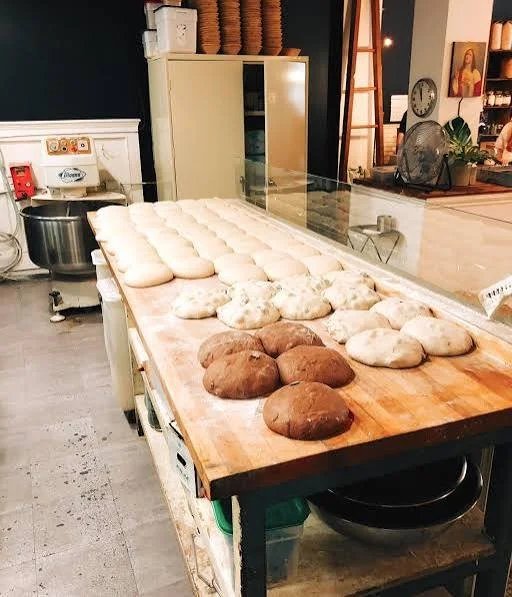
I used to work next door to a wonderful bakery in Vancouver. They made exceptional bread, cakes, croissants and pastries—all baked on-site behind the shopfront. Huge 20-kilo bags of flour were emptied into industrial mixers. Dough was kneaded, tossed and proofed on stainless steel benches hidden behind the sales counter. Fine white dust settled on every surface. Flour was, quite literally, in the air.
I once asked whether they had any gluten-free items for a coeliac friend of mine. The answer was immediate: no. It wasn't that they didn't want to; they couldn't. In a bakery like that, contamination is inevitable. Gluten isn't just in the ingredients; it has become part of the environment. You can't simply designate one corner as "gluten-free."
I sometimes wonder whether the church acts as if holiness can't survive in the public square. We think we have to preserve purity by keeping our distance from the dust of ordinary life. We build walls, create safe spaces, and separate ourselves from anything that might contaminate us. A bench becomes an altar, becomes a separation from the ordinary place.
Jesus did precisely the opposite.
He established his kingdom in the middle of the marketplace. He didn't avoid contamination; he entered it. To the religious establishment, this looked reckless. Yet somehow, instead of brokenness contaminating holiness, holiness began to enter into brokenness.
The past fifteen years have felt like that for me—a long season of cross-contamination. Less protected. Less polished. More invested in the common things. I suspect that's exactly where the kingdom does its best work.